Safeguarding the Past
for a Digital Future
Why Quality Matters in Media Archives
by InSync Technology, a GrayMeta Partner
Today, some of the most culturally influential content in the world depends on footage originally captured decades ago. Media has become the lens through which societies remember, interpret and retell their past.
As audiences embrace nostalgia the demand for archive content is growing. Broadcasters, streaming platforms, rights holders and cultural institutions understand that these assets carry both editorial and commercial weight. Preserving and digitising them effectively is therefore not only a matter of protecting our collective heritage, but also ensuring that valuable content can be leveraged for future use. However, this value is only realised when analogue assets are carefully migrated into stable, high-quality digital forms.
Preservation is More Than File Creation
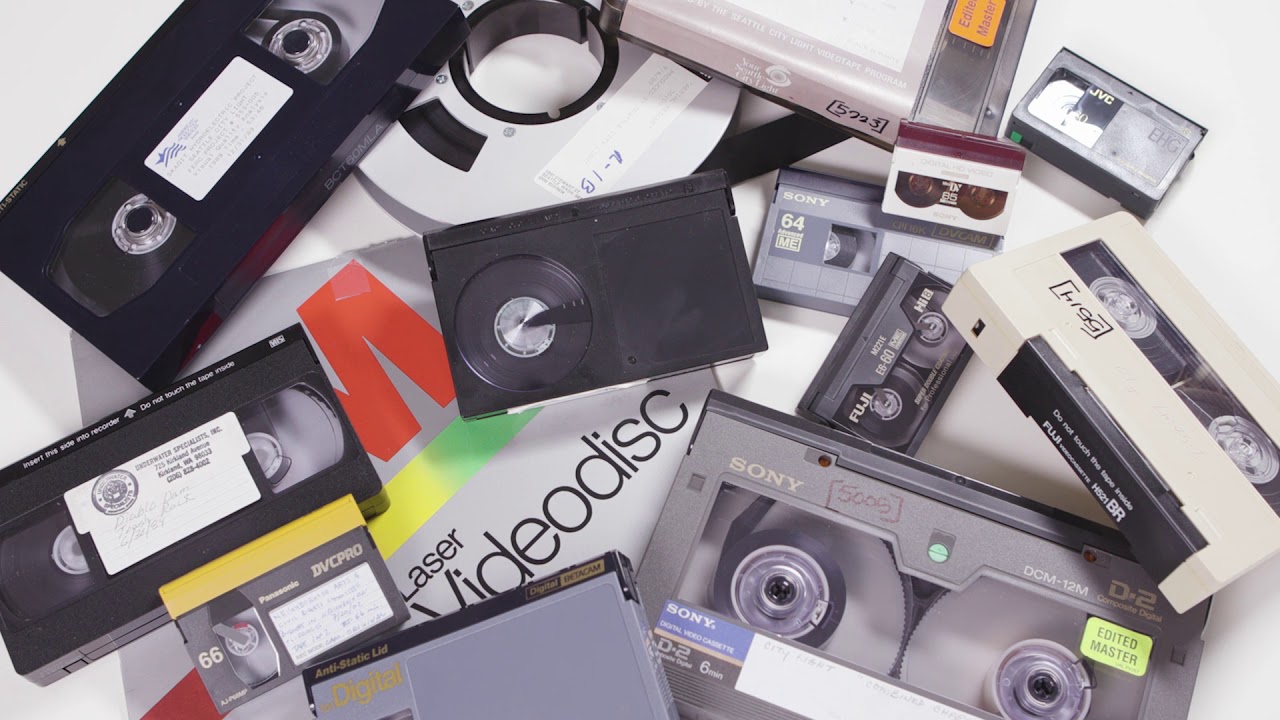
As tape-based archives age, digitisation has become essential to protect content from natural deterioration and from the obsolescence of playback hardware. However, preservation alone cannot unlock the full value of an archive. The real opportunity depends on the state in which assets emerge from the process. That means capturing not just the picture and sound, but ensuring the content is stabilised, corrected and optimised so it can stand up to modern media demands. Reliable archiving supports discoverability and smooth integration into data-driven media pipelines, ready for repurposing and distribution at scale.
High-quality processing is foundational, and it is why InSync has partnered with GrayMeta, to integrate front-end analysis and processing into GrayMeta’s System for Automated Migration of Media (SAMMA). With InSync Inside, analogue material can be transformed into consistent, standards-aligned digital assets that retain their integrity long after the original tape has deteriorated. Processing becomes the mark of quality which ensures that digitised content is truly usable.
Navigating the Complexities of Legacy Media
Digitising legacy material is rarely straightforward. When analogue or SD digital tapes are brought into a modern archive, the incoming signals can vary dramatically in format, stability and overall condition. Ageing tapes may carry noise, drop-outs, timing inconsistencies or incomplete metadata, and playback hardware itself can introduce further variability.
Creating a clean, standards-aligned digital master therefore requires more than simple ingest, it demands a workflow that can analyse and elevate the asset before it becomes part of the permanent archive. This is why the integration of InSync’s AE2020 analysis engine and processing technology within GrayMeta’s SAMMA is so important.
The combined workflow accommodates a wide range of inputs, correcting picture and audio issues at ingest, preserving metadata such as captions and timecode, and compensating for physical tape defects. The system ensures that each migrated tape enters the digital domain in its best possible form. The result is a high-quality, future-ready archive for every genre of content, in any format required.
Turning Archives into Actionable Assets
Once these gold-standard assets enter the digital domain, their value expands dramatically. Precision engineered files slot easily into media supply chains, where they can be searched, versioned, enriched, and distributed at a pace that would be impossible with analogue material.
Organisations can identify opportunities for reuse, respond quickly to content requests, and surface material that might otherwise remain hidden. This is especially powerful in news, sport and factual programming, where the ability to retrieve contextual footage in minutes directly affects editorial output.
High-quality ingest ensures that digitised assets can support a much wider range of downstream applications, from multi-platform delivery to AI-assisted tagging and automated clipping, high-quality archives streamline workflows. When asset integrity is established from the start, organisations reduce the need for costly post-processing and avoid compounding errors over time.
Realising the Full Value of Digitised Archives
Preserving content at the highest standards allows archives to do more than safeguard history; they become a foundation for future storytelling and audience engagement. Carefully processed and intelligently managed, digitised archives evolve from static repositories into strategic tools that unlock new opportunities from past content.
So, what are the key factors that ensure legacy media is preserved, enriched, and ready for the demands of next-generation workflows?
● Signal integrity and format versatility: Supporting analogue composite, component, SD/HD/3G-SDI inputs ensures all content, regardless of origin, can be captured and stabilised to broadcast-ready standards.
● Advanced video processing: Synchronisation, up/down/cross conversion, high-quality interlaced-to-progressive (and progressive-to-interlaced) standards handling, noise reduction and enhancement, all ensure that imperfections are corrected at ingest, to produce consistent, high-quality digital masters.
● Audio fidelity and alignment: Multi-channel embedded audio should be processed for gain, delay, and channel shuffling, guaranteeing clear, properly aligned sound across complex archive material.
● Metadata accuracy and preservation: Captions, timecode and signal analysis metadata are captured alongside video, enabling efficient search, compliance, and integration into media supply chains.
● Defect analysis and dropout compensation: Physical tape defects and ageing artefacts are identified and corrected, protecting content that might otherwise be lost.
By addressing these factors at the point of ingest, we create digitised archives that are not just preserved, but fully primed for monetisation.